Are you looking for the answers to your worksheet on periodic trends? You’ve come to the right place! Understanding the periodic table and its trends can be tricky, but with the right guidance, you’ll breeze through it.
In this article, we’ll provide you with the answers to your worksheet on periodic trends. We’ll break down the concepts and help you understand how to tackle similar problems in the future. Let’s dive in!
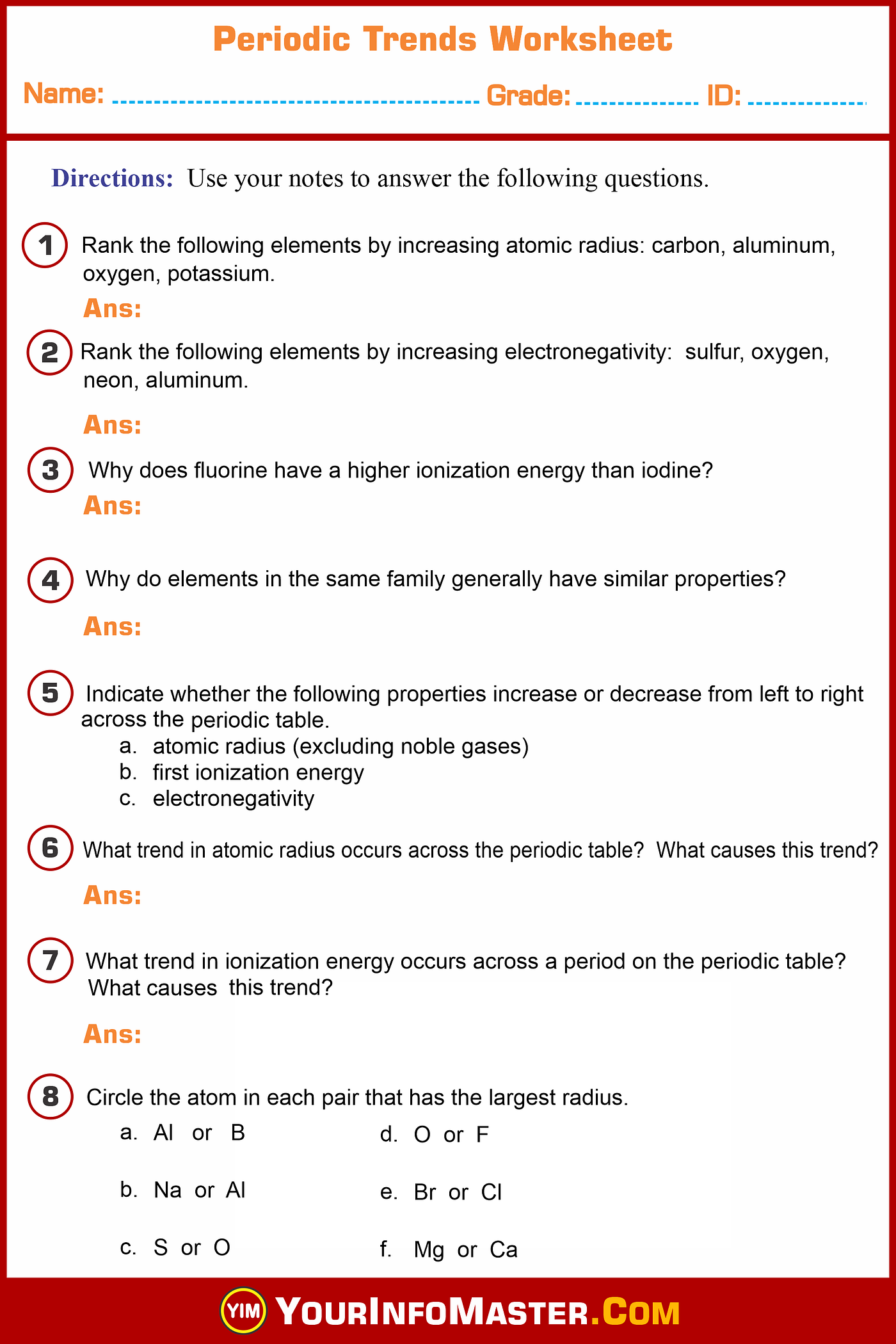
worksheet periodic trends answers
Worksheet Periodic Trends Answers
First, let’s start with atomic radius. Atomic radius decreases across a period and increases down a group. This trend is due to the increasing number of protons in the nucleus, which pull the electrons closer to the center.
Next, let’s talk about ionization energy. Ionization energy follows the opposite trend of atomic radius. It increases across a period and decreases down a group. This is because it requires more energy to remove an electron from a smaller atom than a larger one.
Now, let’s move on to electronegativity. Electronegativity is the ability of an atom to attract electrons. Similar to ionization energy, electronegativity increases across a period and decreases down a group. Elements on the right side of the periodic table have higher electronegativity values.
In conclusion, understanding periodic trends is crucial for grasping the behavior of elements on the periodic table. By knowing how atomic radius, ionization energy, and electronegativity change, you’ll be well-equipped to tackle any worksheet on periodic trends that comes your way.
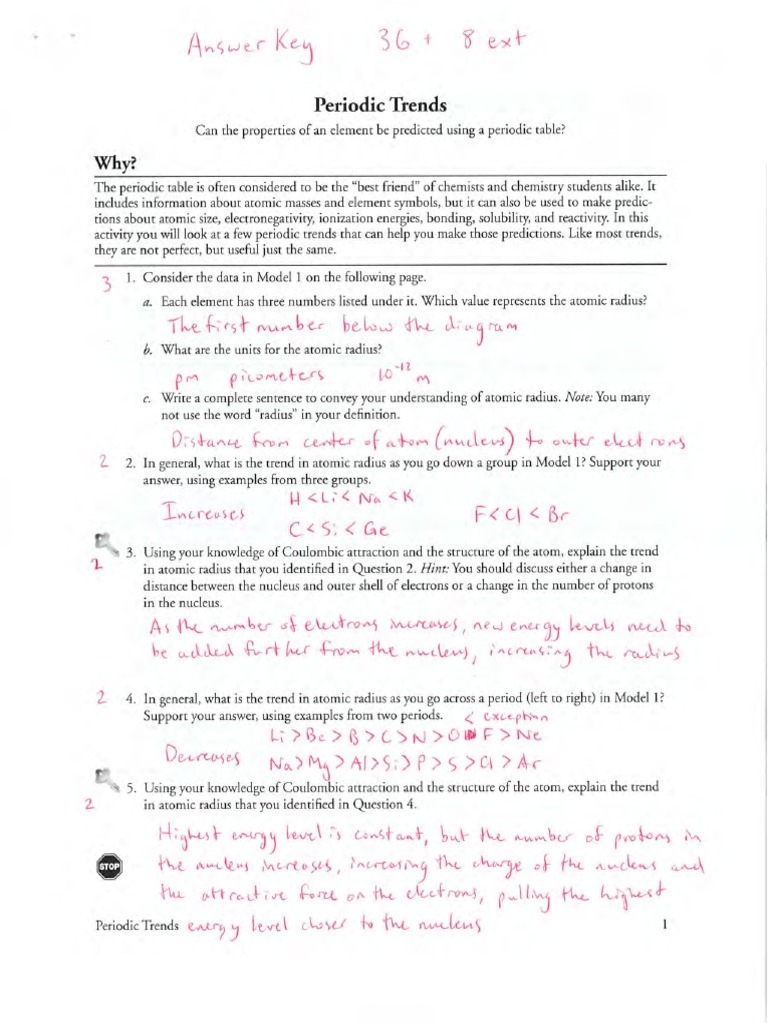
Free Periodic Trends Worksheet Download Free Periodic Trends Worksheet Png Images Free Worksheets On Clipart Library
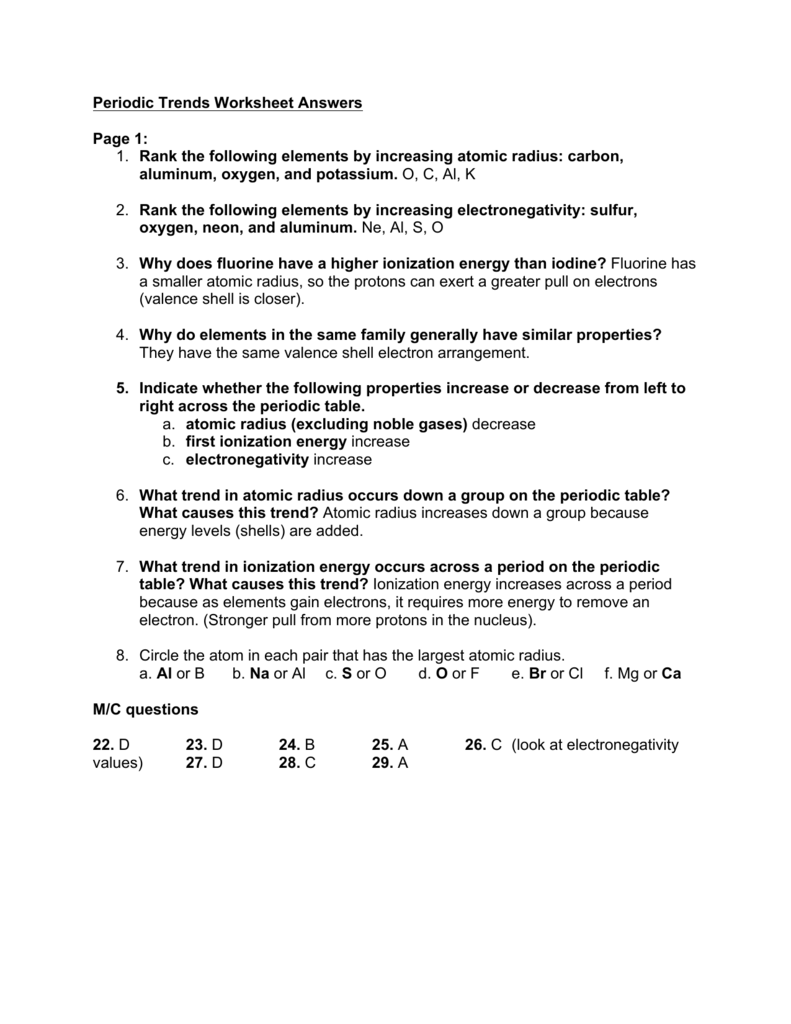
Periodic Trends Worksheet With Answers
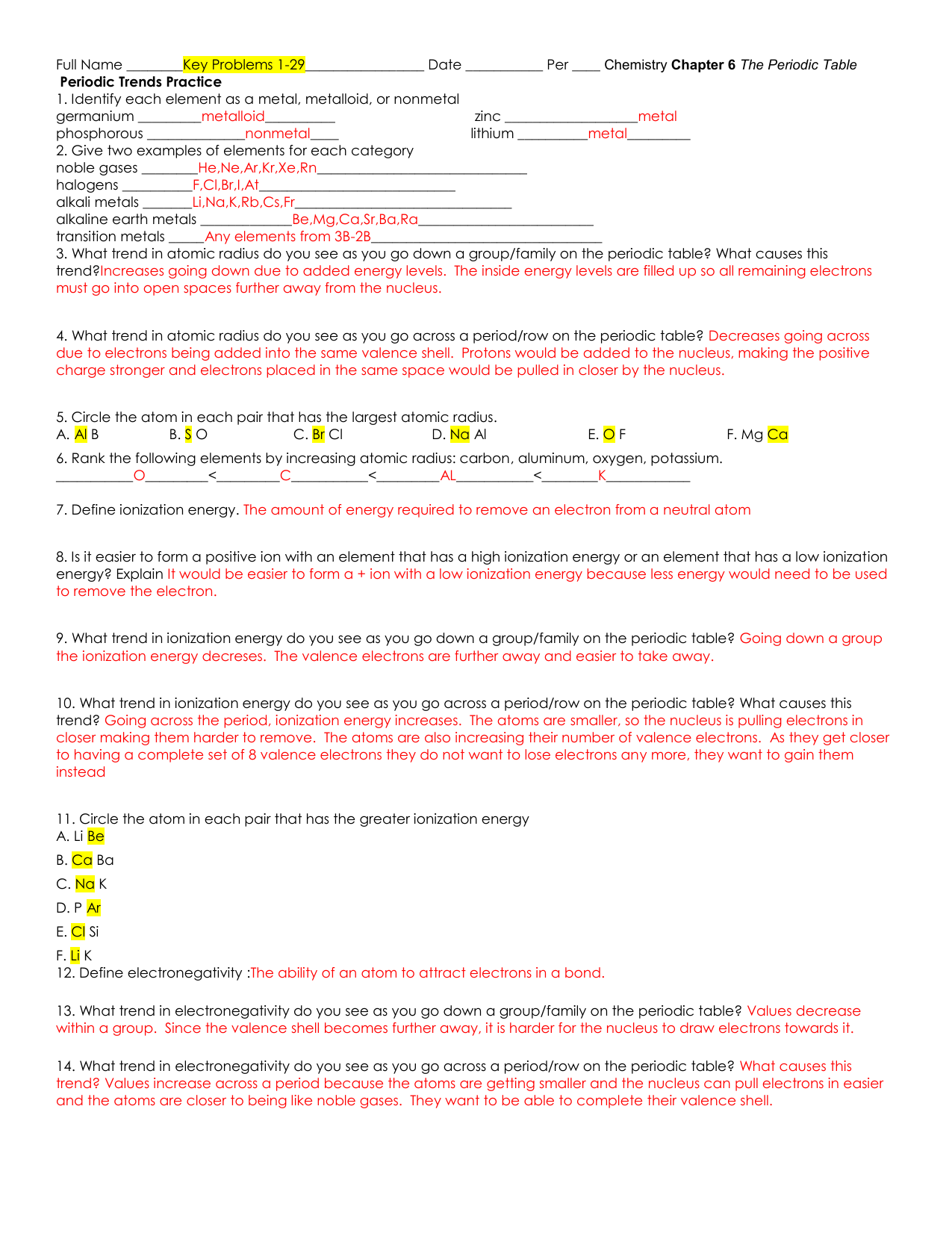
Periodic Trends Chemistry Worksheet Atomic Radius More
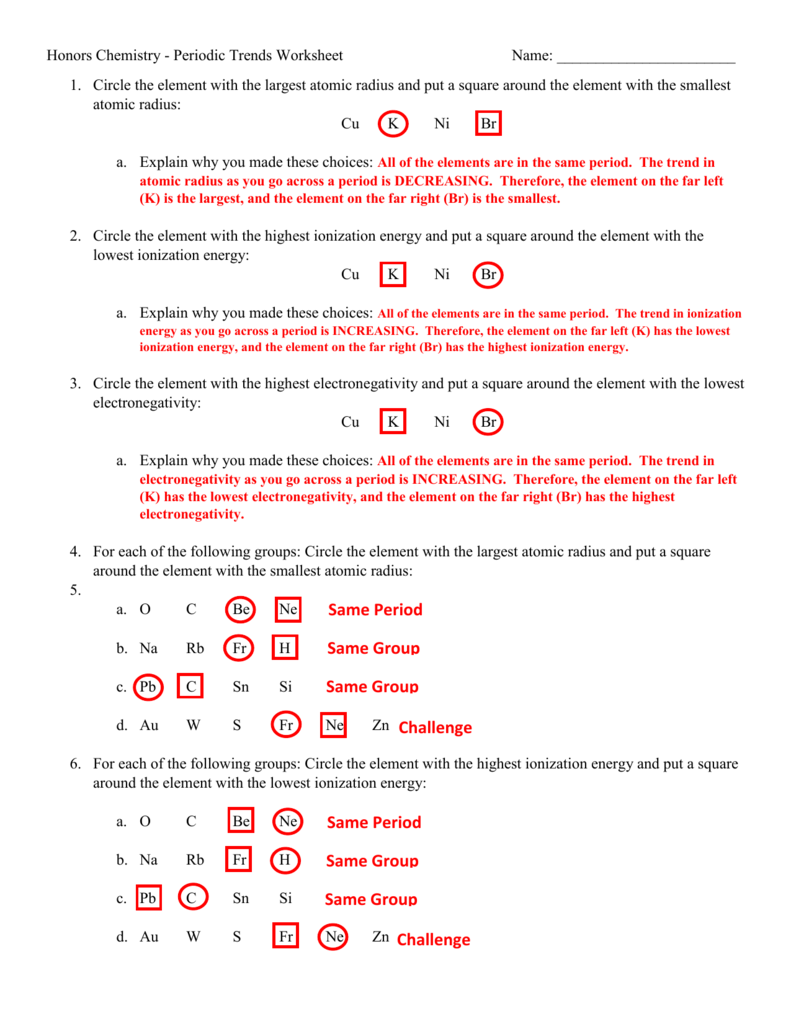
Periodic Trends Chemistry Worksheet High School
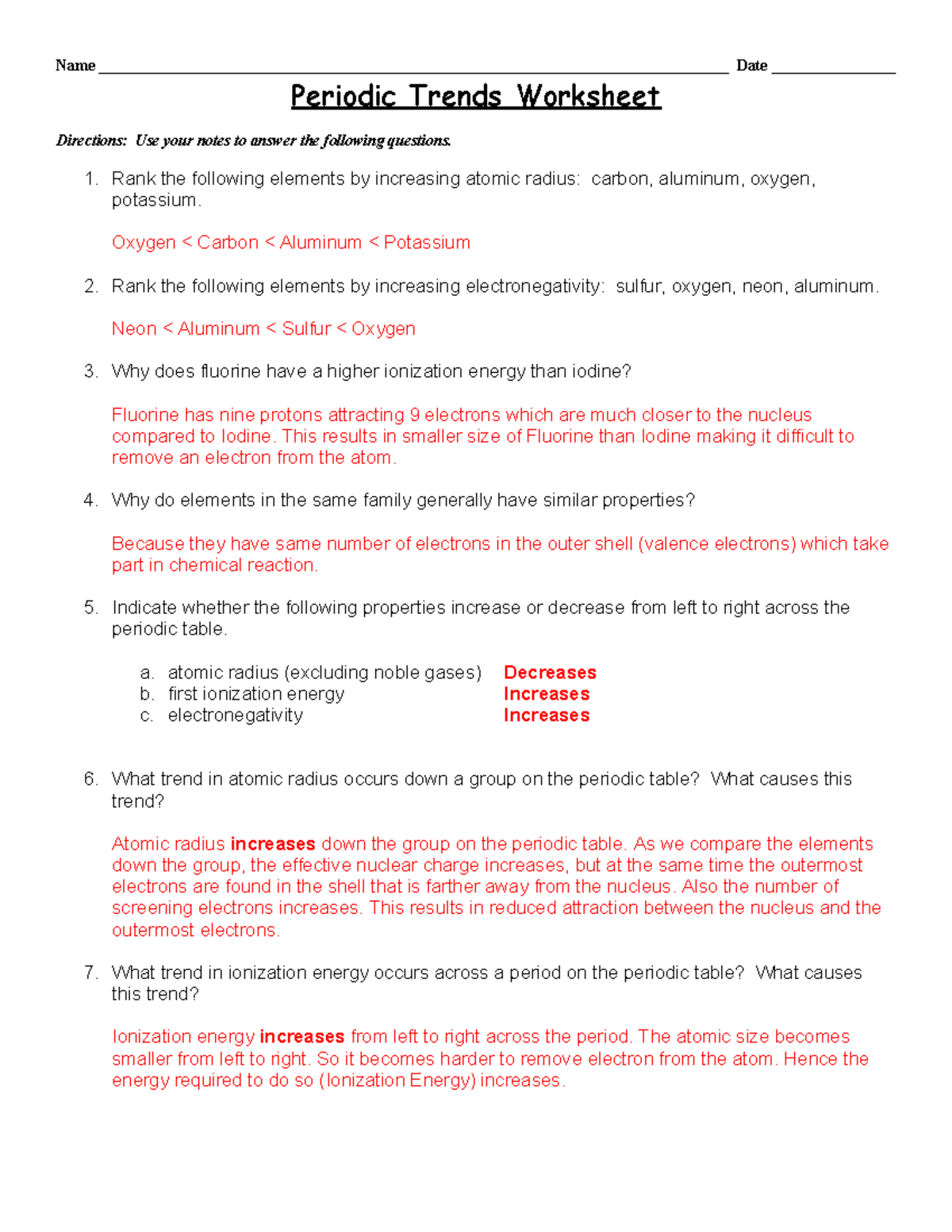
Periodic Trends Worksheet Answer Key 2 Chemistry Class Studocu