Are you looking for the answers to the figurative language – identify it worksheet? You’ve come to the right place! Figurative language can be tricky to understand, but with a little help, you’ll be able to ace that worksheet in no time.
Figurative language is used to create vivid images and evoke emotions in the reader. It includes similes, metaphors, personification, and more. By identifying these elements in a text, you can better understand the author’s intent and message.
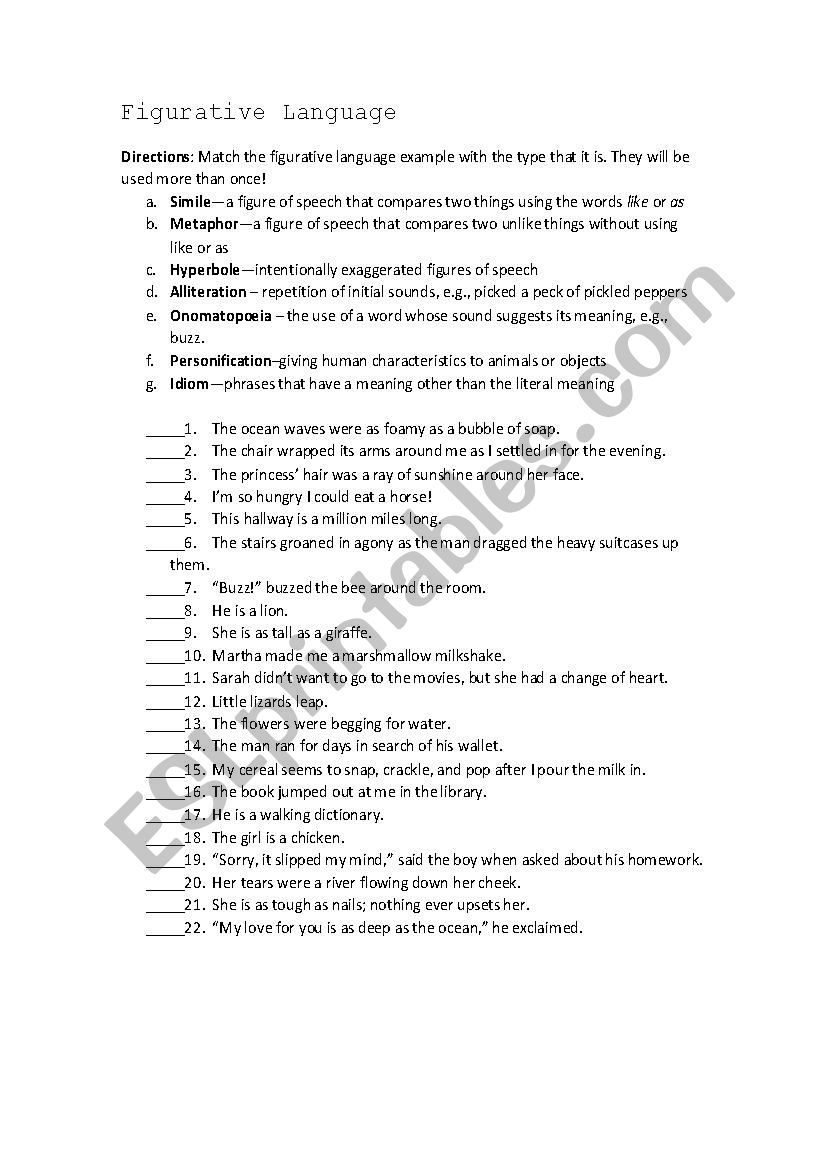
figurative language – identify it worksheet answers
Figurative Language – Identify It Worksheet Answers
One example of figurative language is a simile, which compares two things using “like” or “as.” For instance, “Her smile was as bright as the sun.” In this sentence, the author is comparing the brightness of the smile to the sun.
Another example is personification, which gives human qualities to non-human things. For example, “The wind whispered through the trees.” In this sentence, the wind is being personified as if it has the ability to whisper like a person.
Metaphors are also common in figurative language, where a comparison is made without using “like” or “as.” For example, “Time is a thief.” In this metaphor, time is being compared to a thief, implying that it steals moments from our lives.
By practicing identifying these different types of figurative language, you’ll become more adept at analyzing texts and understanding the deeper meanings behind the words. So, next time you encounter a figurative language – identify it worksheet, you’ll be ready to tackle it with confidence!
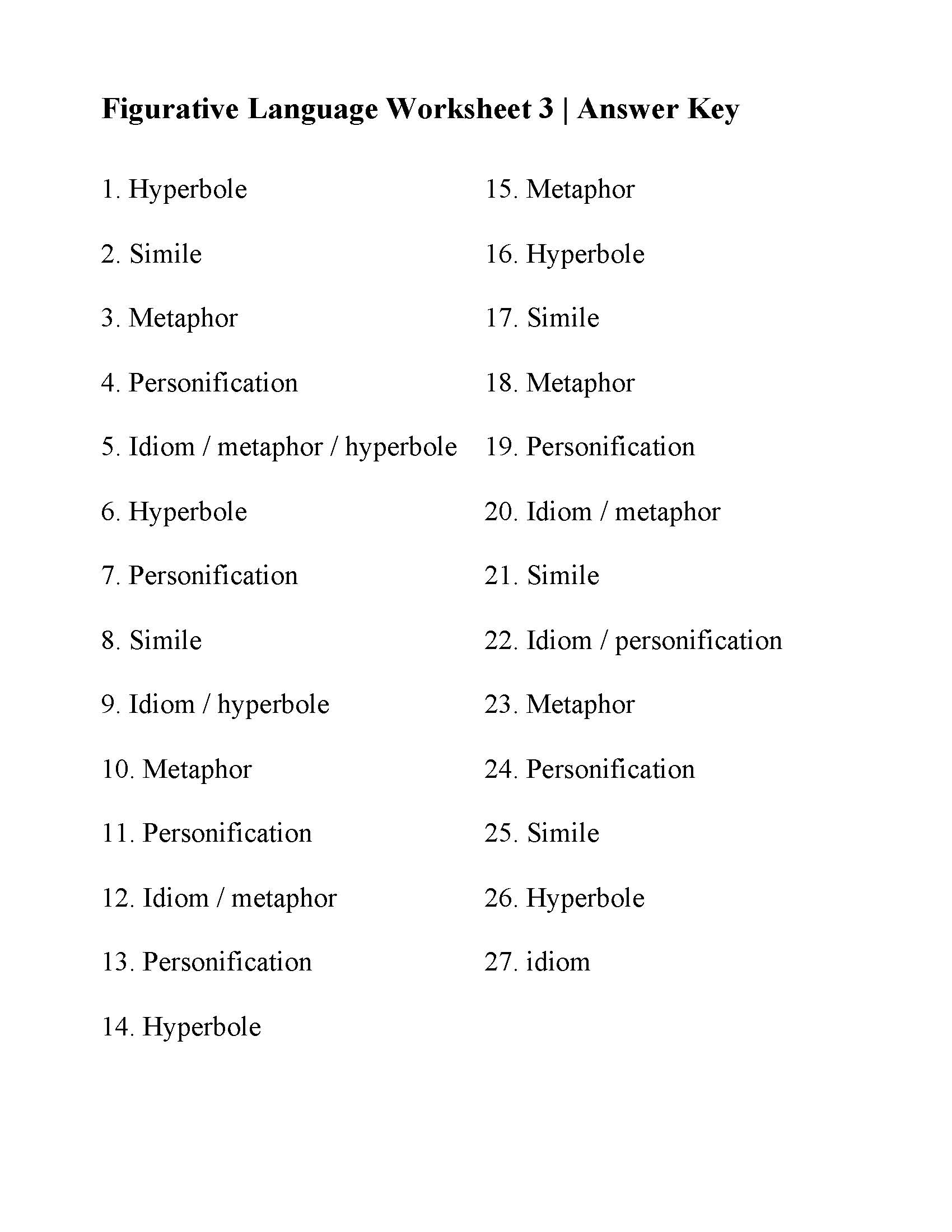
Figurative Language Worksheet 3 Reading Activity Worksheets Library
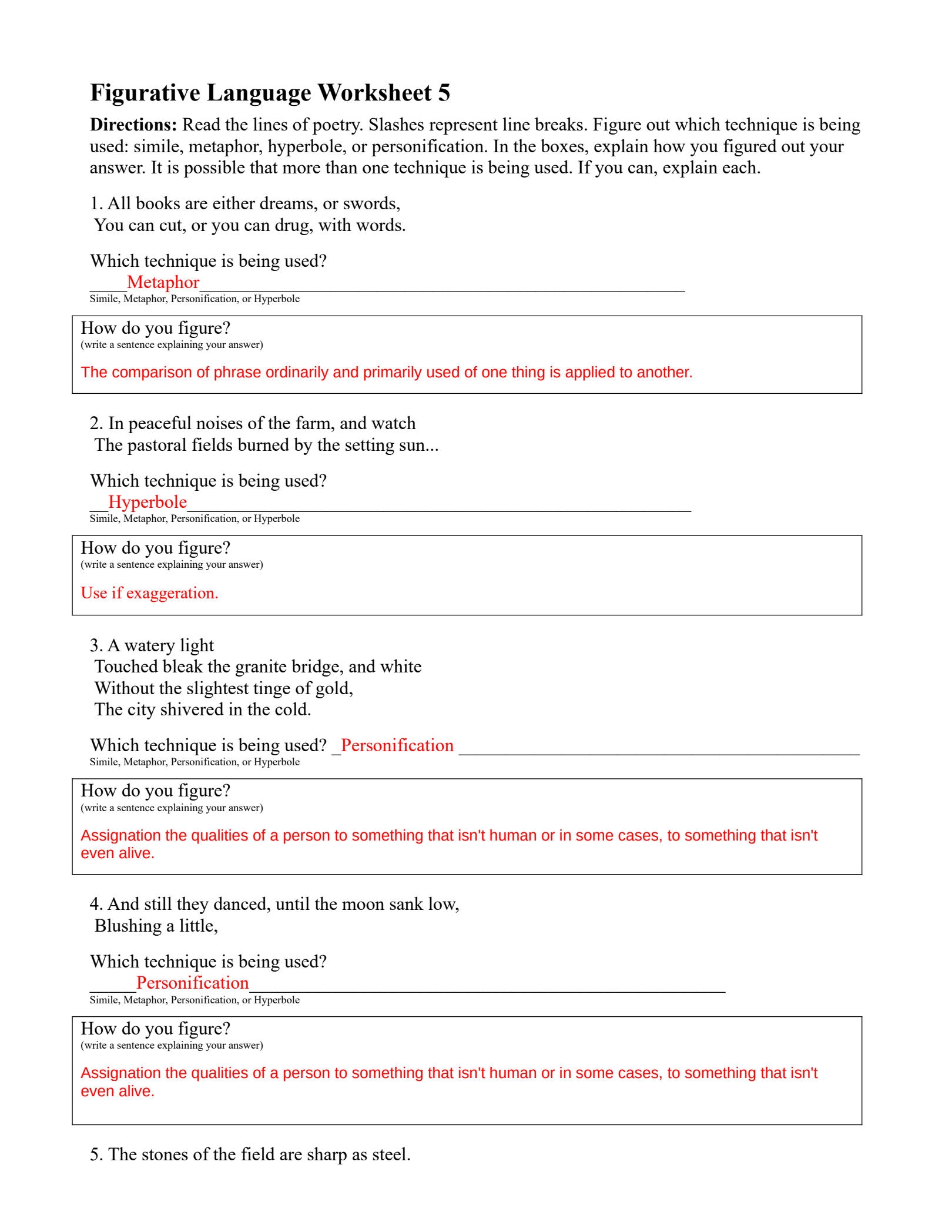
Figurative Language Worksheet 1 Answers Unlocking Literary Devices
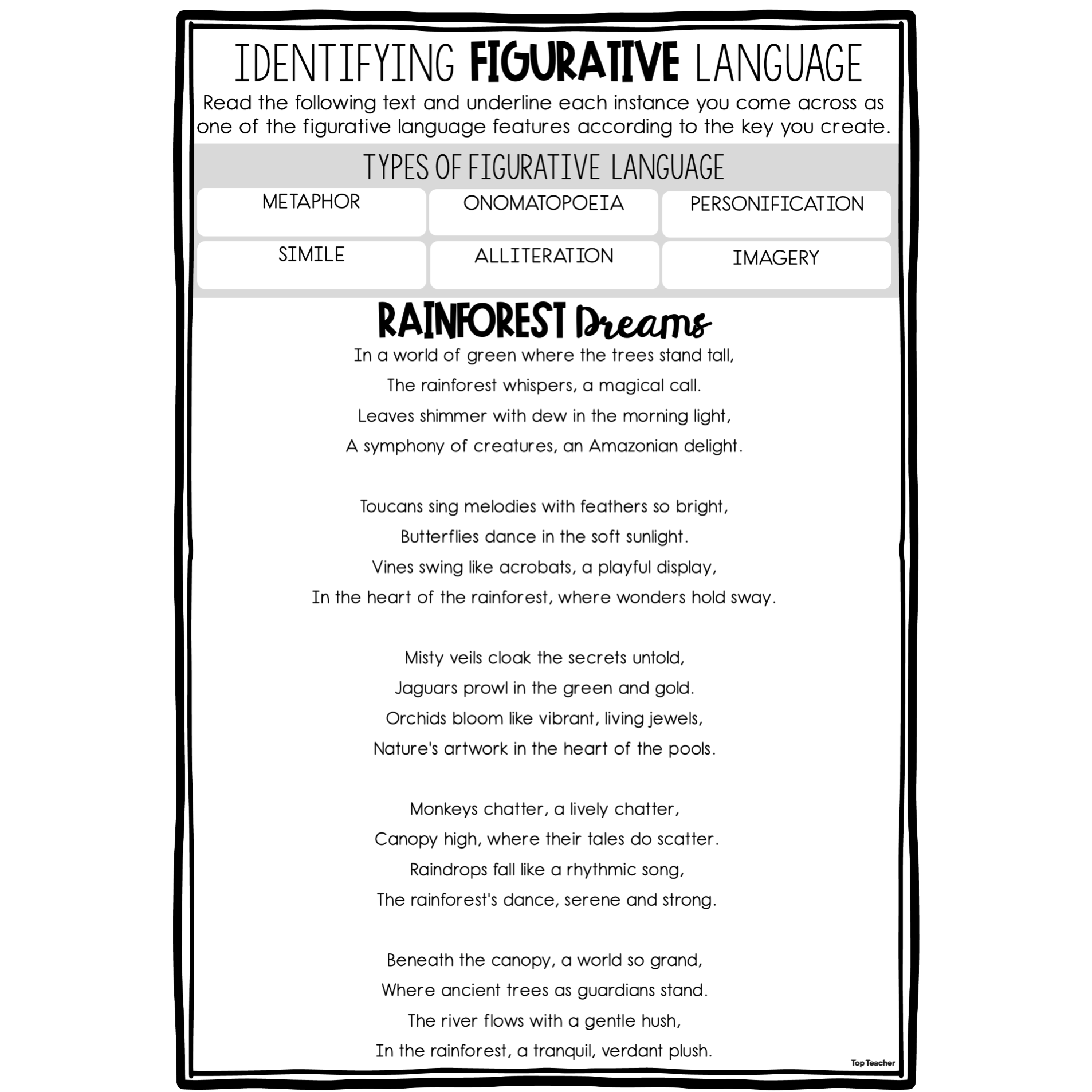
Identifying Figurative Language Worksheet Top Teacher
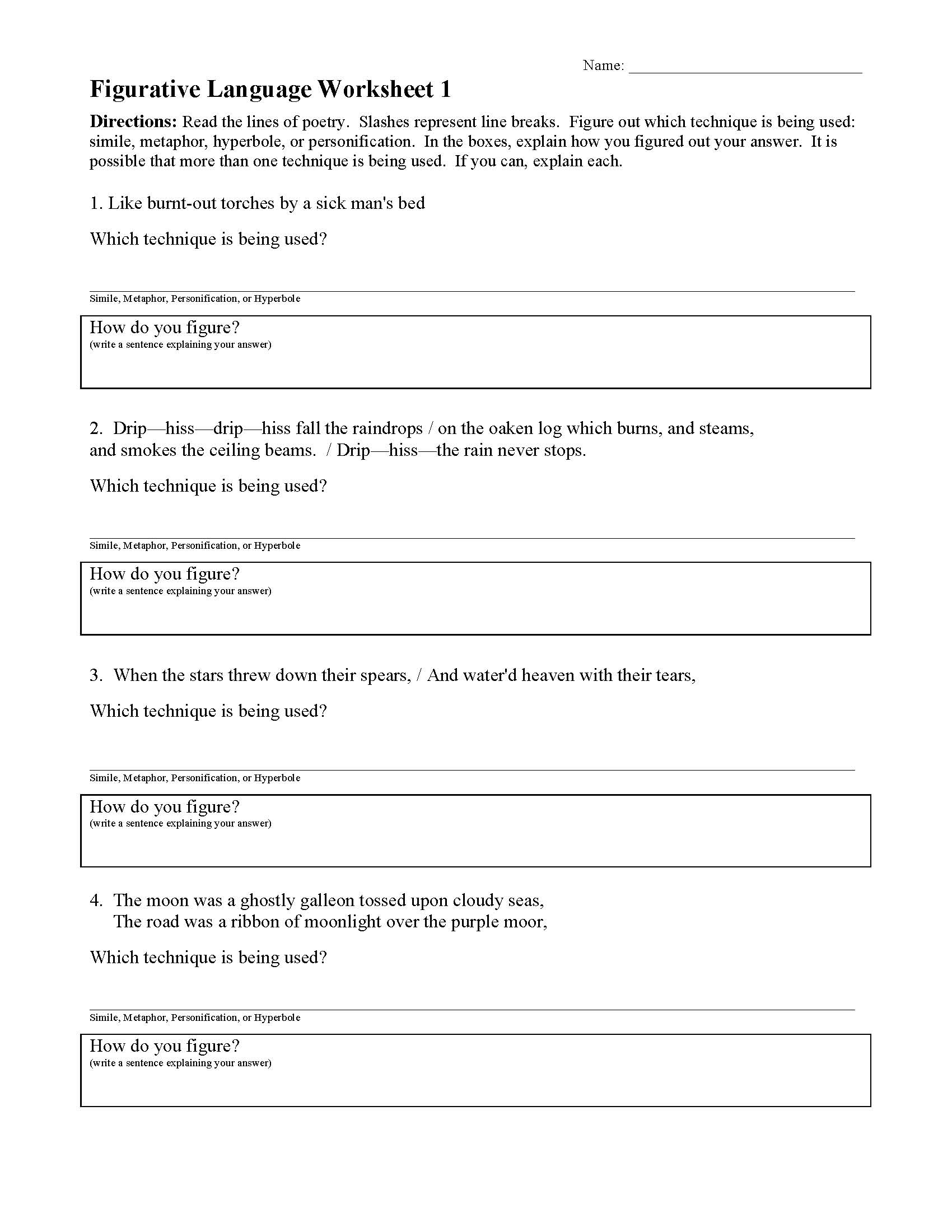
Figurative Language Worksheet 1 Reading Activity
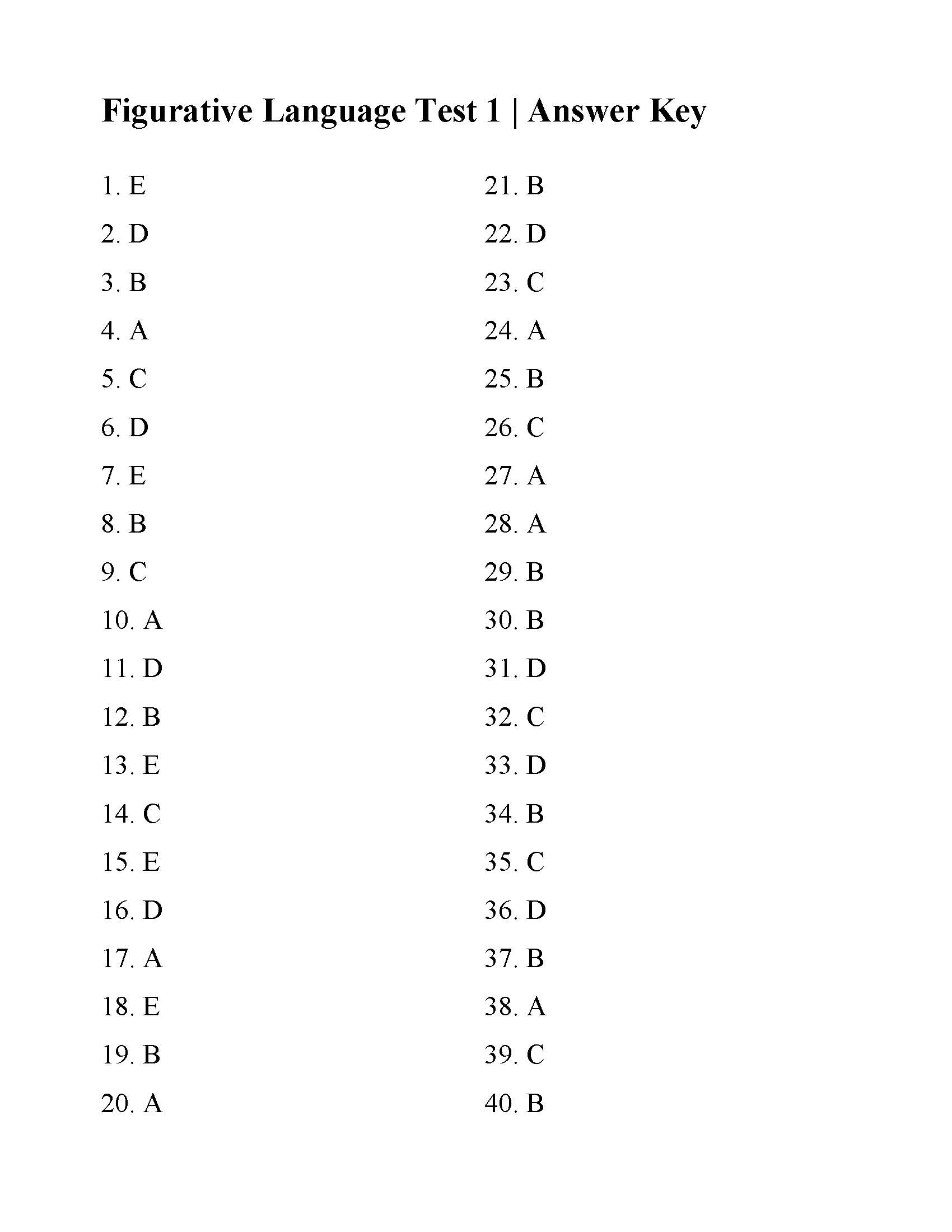
Figurative Language Test 1 Reading Activity